

Challenges and Solutions in Card Processing for Travel and Tourism Businesses
Travel agencies, tour operators and booking platforms can compare merchant-account routes, payment channels, reserve terms and underwriting requirements through our dedicated service page.
Travel and tourism businesses can face distinct payment-processing challenges, including international card acceptance, advance bookings, refunds, chargebacks, currency conversion and booking-system integration. This guide explains the operational issues to consider and the questions to raise with prospective providers.

Challenges in Card Processing for Travel and Tourism Businesses: Navigating Currency Conversion
One of the major challenges that travel and tourism businesses face when it comes to card processing is navigating currency conversion. When customers from different countries make purchases, the issue of converting currencies can lead to confusion and potential disputes. This can result in extra fees for both the business and the customer, impacting the overall user experience. Finding a seamless solution for handling currency conversion is essential for ensuring smooth transactions for international customers.
Another challenge in card processing for travel and tourism businesses is dealing with fluctuating exchange rates. Exchange rates can vary daily, which makes it difficult for businesses to accurately predict the final amount that customers will be charged. This uncertainty can lead to pricing discrepancies and potential customer dissatisfaction. Implementing a system that can provide real-time exchange rate information and transparency in pricing can help businesses mitigate this challenge and provide a better experience for their customers.
Payment Security in the Travel Industry: Safeguarding Customer Data
When it comes to payment security in the travel industry, safeguarding customer data is crucial for building trust and ensuring smooth transactions. Travel and tourism businesses face unique challenges in card processing, from handling international transactions to protecting sensitive information from cyber threats. To address these issues, businesses must implement effective solutions that prioritize security without compromising user experience.
One way to enhance payment security is through tokenization, which replaces sensitive card data with unique tokens that are meaningless to hackers. Additionally, implementing PCI DSS compliance can help businesses maintain secure payment processing practices. By staying up-to-date with the latest security protocols and utilizing advanced encryption technologies, travel and tourism companies can protect customer data and minimize the risk of fraud.
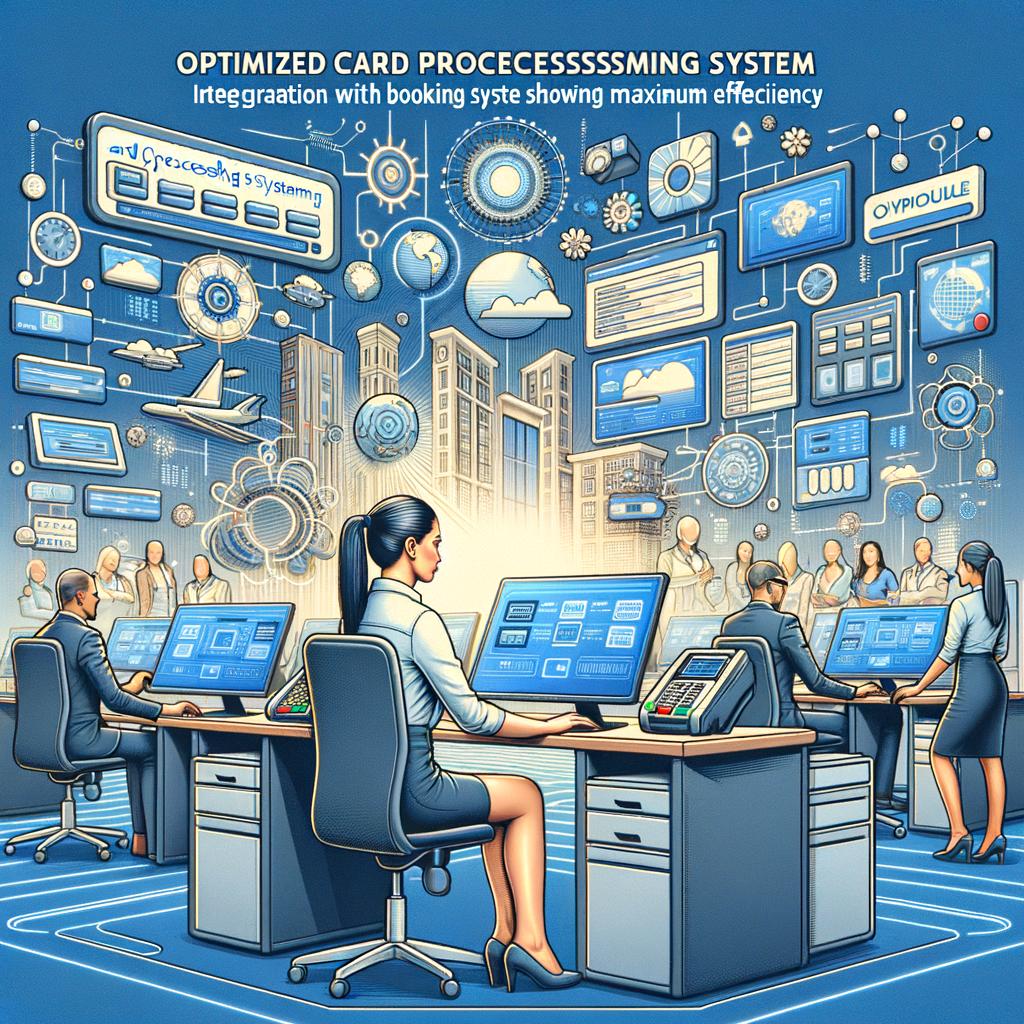
Maximizing Efficiency in Card Processing for Tour Operators: Integrating with Booking Systems
In the fast-paced world of travel and tourism, efficiency in card processing is crucial for tour operators to stay competitive and provide seamless booking experiences for their customers. Integrating card processing systems with booking systems can streamline operations and improve overall customer satisfaction. However, this integration can come with its fair share of challenges.
One common challenge that tour operators face is the complexity of integrating different payment gateways with their booking systems. This can lead to issues such as payment delays, errors in processing, and difficulty in reconciling transactions. To overcome these challenges, tour operators can consider using payment gateway aggregators that allow them to connect multiple payment gateways through a single integration. Additionally, implementing real-time payment processing and automatic reconciliation features can help tour operators maximize efficiency and provide a seamless booking experience for their customers.
Tackling Chargebacks in the Tourism Sector: Strategies for Dispute Resolution
In the fast-paced world of travel and tourism, chargebacks can be a major headache for businesses. Whether it’s a customer disputing a charge for a canceled reservation or a fraudulent transaction, dealing with chargebacks can be time-consuming and costly. Thankfully, there are strategies that businesses in this sector can implement to effectively tackle and resolve chargebacks.
One effective strategy is to provide clear and detailed terms and conditions to customers at the time of booking. By clearly outlining cancellation policies, refund processes, and any other relevant information, businesses can reduce the likelihood of customers disputing charges. Additionally, implementing robust fraud detection measures, such as address verification systems and CVV verification, can help prevent fraudulent transactions and reduce the risk of chargebacks. By taking proactive steps to address potential disputes, travel and tourism businesses can better protect their bottom line and provide a positive experience for their customers.
Final Thoughts
Travel payment processing should be assessed against the business model, booking lead time, payment channels, refund exposure, integration requirements and provider underwriting criteria.
Compare travel merchant account and payment-processing options with We Tranxact.
