
What Type of Merchant Account Do I Need UK?
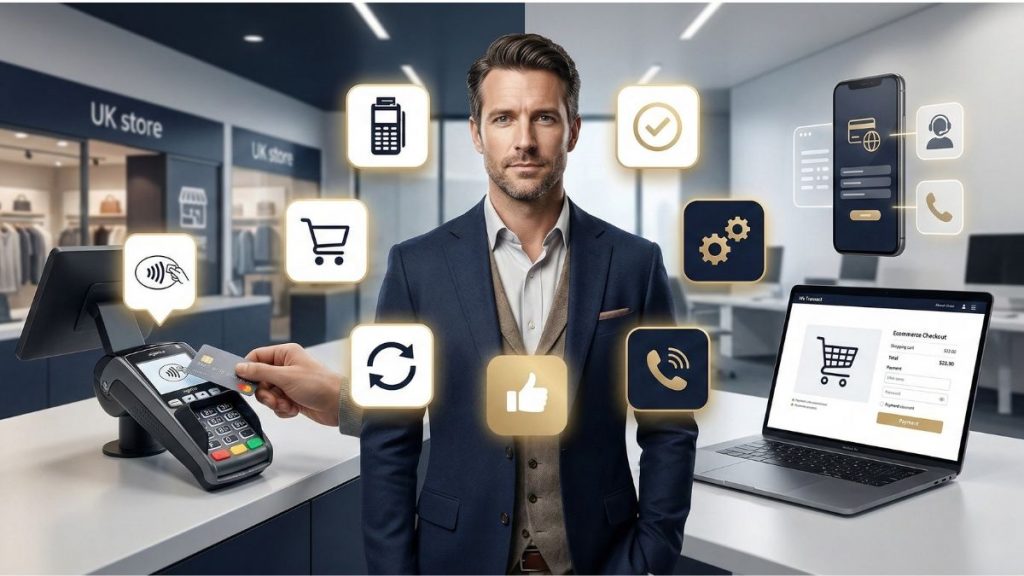
What Type of Merchant Account Do I Need UK?
The type of merchant account you need depends on how you take payments, your industry, your average transaction value, whether you need online, phone or face-to-face payments, and how providers assess your business. In the UK, some businesses need a straightforward card payment setup, while others need a more tailored merchant account for ecommerce, MOTO, recurring billing, or a more complex trading model.
Written by Rav Bains
Rav Bains works with UK businesses looking for practical payment solutions, from merchant accounts and card machines to ecommerce and MOTO setups. Through We Tranxact, he helps businesses compare providers, understand approval factors, and find payment solutions that match how they actually trade.
We Tranxact Ltd helps UK businesses understand which payment setup fits their business model before they apply. That matters because choosing the wrong merchant account can create avoidable friction, failed applications, poor provider fit, or a payment setup that no longer works once your business grows.
If you are asking what type of merchant account you need, the answer usually comes down to five practical factors: how you take payments, what industry you are in, how much your customers typically spend, whether you need recurring billing or remote payments, and how payment providers view your business from a risk and operational perspective.
This guide breaks that down in plain English so you can work out whether your business needs a standard merchant account, card machine support, an ecommerce payment setup, a MOTO solution, or a more tailored route based on sector and trading model.
Need help choosing the right merchant account?
We Tranxact helps UK businesses compare payment solutions based on industry, payment method, provider fit, and real-world trading requirements.
Speak to We TranxactWhat is a merchant account and why does it matter?
A merchant account is the payment setup that allows your business to accept card payments from customers. It works behind the scenes with your provider, gateway, card machine, or virtual terminal so transactions can be authorised, processed, and settled to your business account.
For some businesses, that setup is relatively straightforward. For others, it is more nuanced. A retail shop taking in-person payments has different needs from a hotel, a subscription business, a service company taking payments by phone, or an ecommerce business selling online. That is why the best merchant account is rarely one-size-fits-all.
In the UK, payment services operate within a regulated environment shaped by bodies such as the Financial Conduct Authority. Card payments are also processed across major global networks including Visa and Mastercard.
How to work out what type of merchant account you need
The easiest way to work this out is to start with how your business actually gets paid, not just what industry label you fall under.
1. Do you take payments face to face?
If you trade in person, such as in retail, hospitality, beauty, garages, restaurants, gyms, or local service businesses, you will usually need a merchant account that supports card machine payments. In this case, reliability, speed, customer convenience, and day-to-day ease of use are major factors.
Relevant pages: Card Machines and Merchant Accounts.
2. Do you take payments online?
If your customers pay through your website, checkout page, or online store, you will usually need an ecommerce-compatible merchant account. That often means gateway compatibility, secure checkout, fraud controls, and support for the platforms your business uses.
Relevant page: Ecommerce Payments.
3. Do you take payments over the phone?
If you process customer payments remotely by phone, you may need a merchant account that supports MOTO transactions. This is common for bookings, orders, service businesses, and businesses that do not always take payment in person or through a website checkout.
Relevant page: MOTO / Virtual Terminal Payments.
4. Do you need recurring billing?
If your business charges customers regularly, such as through memberships, subscriptions, retainers, or repeated monthly billing, your merchant account may need recurring payment functionality. Some providers are more comfortable with recurring models than others, so fit matters here.
5. Is your business model more complex than average?
Some businesses need a more tailored merchant account because the sector is more complex, delivery times are longer, average order values are higher, disputes are more likely, or mainstream providers do not fully understand how the business operates. In those situations, getting the right provider fit can be more important than simply getting approved quickly.
Why your industry affects the merchant account you need
Industry matters because providers often assess businesses differently based on transaction profile, delivery times, refund patterns, dispute exposure, compliance considerations, and how the customer journey works in practice. That means one payment setup may suit a high street retailer but not a hotel, online brand, or business taking remote payments.
Usually need dependable in-person payment acceptance and a straightforward daily card flow.
See retail payment optionsOften need fast, reliable card acceptance that fits a busy hospitality environment.
See restaurant payment optionsMay need mobile, on-site, or flexible payment options depending on how jobs are billed.
See trades payment optionsFor a broader sector overview, visit our Merchant Accounts by Industry UK page, which acts as the main hub for industry-specific payment content.
What providers usually look at before approving a merchant account
Providers do not just look at your sector name. They also consider how your business operates day to day. That can include:
- How you take payments: face to face, online, by phone, or a mix
- Your average transaction value
- Whether you take one-off or recurring payments
- How quickly you deliver your product or service
- Your refund and dispute exposure
- Whether your provider setup needs gateway, card machine, MOTO, or hybrid support
- Whether you have had restrictions or declines before
The clearer these points are, the easier it is to narrow down what type of merchant account is likely to fit your business.
A practical UK view: what works in different regions and business settings
Across the UK, businesses in London, Birmingham, Manchester, Leeds, Glasgow, Bristol, and other major trading centres can face different customer payment behaviours depending on sector, service style, and local buying patterns. A card machine setup for a busy city restaurant may differ from what works best for a mobile trades business, a hotel, or a growing ecommerce brand serving customers nationally. That is why choosing the right merchant account is less about chasing a generic provider and more about matching the setup to how your business operates in the real world.
Common mistakes businesses make when choosing a merchant account
Choosing on headline price alone
A lower-looking rate is not always the best fit if the provider does not suit your business model, limits how you trade, or becomes restrictive later.
Using the wrong setup for the payment journey
A business taking phone payments may struggle with a setup designed mainly for ecommerce, while a fast-moving retail environment may need very different tools from a service-based business.
Ignoring industry fit
Even if an account is approved, long-term fit still matters. Some providers are better aligned with certain sectors than others.
Not planning for growth or mixed payment channels
Your setup should still work if you add online payments, begin taking remote payments, or expand into new product and service lines.
A simple way to decide
If you want a fast decision framework, use this:
- List every way your customers currently pay you.
- Note whether your payments are face to face, online, by phone, or recurring.
- Identify your typical transaction values and refund patterns.
- Check whether your sector has any complexity that may affect provider fit.
- Match your business to the merchant account type that supports those needs.
A business that has outgrown a basic provider, needs a Stripe alternative, or has run into restrictions may need a more suitable merchant account based on how it trades and how providers assess the account.
View our case studiesRelated pages
Explore the pages below if you want to compare solutions in more depth:
Not sure which merchant account fits your business?
We Tranxact can help you compare options based on your industry, payment method, and trading model so you can move toward a payment setup that actually fits.
Request a QuoteFAQs
What type of merchant account do I need for a small business in the UK?
It depends on whether you take payments in person, online, or by phone. A small retail business may need a card machine setup, while an online or service-based business may need ecommerce or MOTO functionality.
Do I need a different merchant account for online payments?
Often, yes. Online payments usually need a compatible gateway and checkout flow, which is different from a face-to-face card machine setup.
What if I take payments over the phone?
You may need a merchant account that supports MOTO transactions through a virtual terminal, depending on how your business takes customer details and processes payments.
Does my industry affect which merchant account I can get?
Yes. Providers often assess different sectors differently, so your industry can affect provider fit, application confidence, pricing structure, and the type of setup that works best.
Can I switch if my current provider no longer suits my business?
Yes. Many businesses review their payment setup when they expand, add new payment channels, experience restrictions, or want a provider that better matches how they trade.
Do I need a card machine and a merchant account together?
In many face-to-face trading environments, yes. A card machine handles the transaction on the customer side, while the merchant account supports the payment processing behind the scenes.
What is the difference between a standard and more tailored merchant account setup?
A standard setup may suit straightforward face-to-face or low-complexity trading. A more tailored setup may be needed where there are online payments, MOTO, recurring billing, longer fulfilment periods, or a more specialist sector profile.
Can ecommerce businesses need a different provider from retail shops?
Yes. Ecommerce businesses often need gateway support, secure checkout, and tools suited to online transactions, while retail shops tend to prioritise card machine speed, reliability, and in-person payment flow.
What is the easiest way to work out which merchant account I need?
Start with how you take payments, what sector you are in, your transaction values, and whether you need card machines, online checkout, MOTO, or recurring billing. That usually points you toward the right type of solution.
