

Comparative Analysis: Credit Cards, Debit Cards, and E-Wallets for Online Purchases
Take a seat, grab your favorite beverage, because we’re about to embark on a wild journey into the world of online shopping. Whether you’re a tech-savvy shopaholic or a cautious skeptic of online transactions, you’ve probably heard of the three heavyweight contenders: credit cards, debit cards, and e-wallets. These digital warriors offer us the power to wield our finances with a mere click, swipe, or tap. But which one is truly worthy of our trust? Fear not, dear readers, as we delve into the realm of comparative analysis to uncover the strengths, weaknesses, and quirks of each mighty contender. Prepare to have your online purchasing prowess elevated to new heights as we explore the realm of credit cards, debit cards, and e-wallets. Let the battle of convenience, security, and swag-worthy perks commence!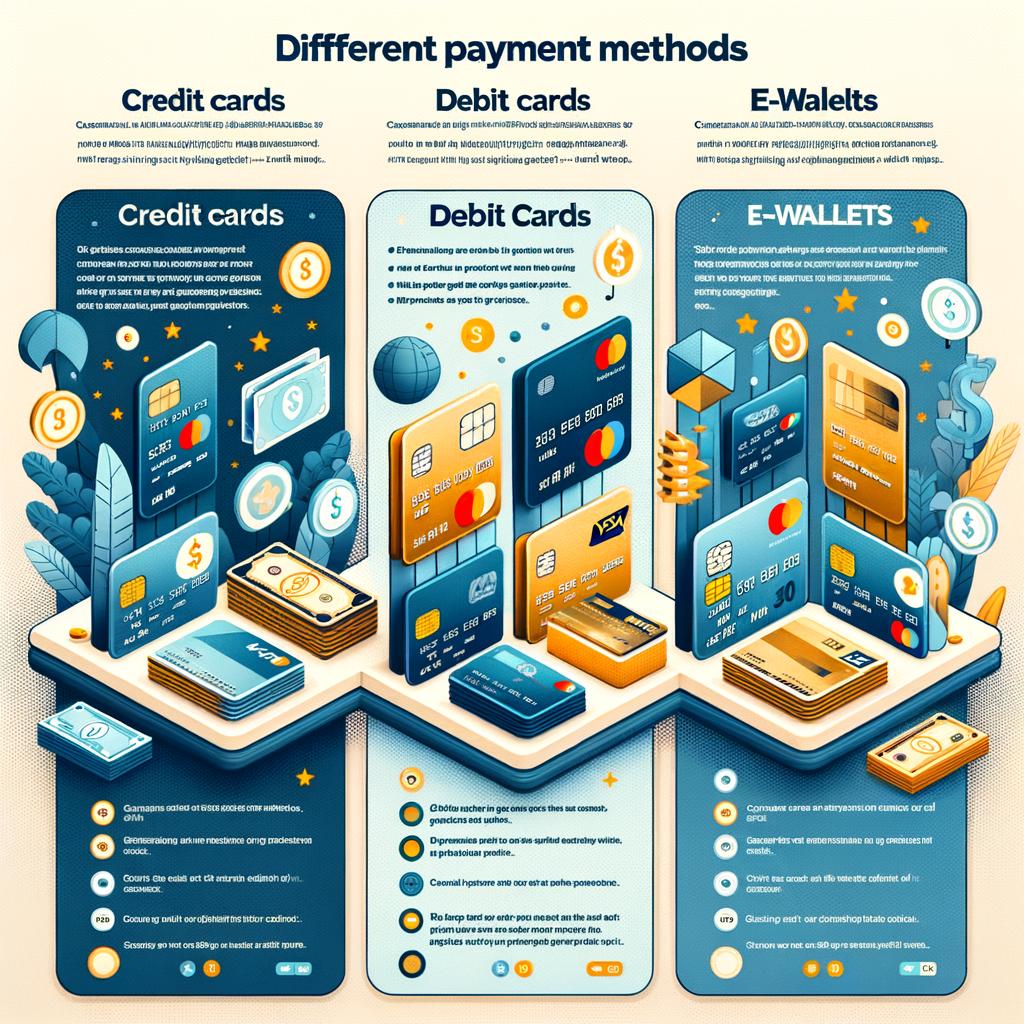
Comparing Payment Options: The Pros and Cons of Credit Cards, Debit Cards, and E-Wallets
When it comes to making online purchases, it’s important to consider your payment options carefully. Credit cards, debit cards, and e-wallets are all popular choices for online transactions, each with their own set of pros and cons. Let’s take a closer look at how these three options stack up against each other.
Credit Cards
Credit cards are a convenient and widely accepted payment method for online purchases. Here are some of the pros and cons:
- Pros:
- You can buy now and pay later, helping you manage cash flow.
- Credit cards offer fraud protection, minimizing the risk of unauthorized transactions.
- They often come with rewards programs that allow you to earn points, cashback, or airline miles.
- Cons:
- High-interest rates can make it easy to accumulate debt if you’re not careful.
- Overspending is a common pitfall, as the credit limit may tempt you to make impulse purchases.
Debit Cards
Debit cards, linked directly to your bank account, offer a different set of advantages and disadvantages:
- Pros:
- Debit cards provide a convenient way to access funds without carrying cash.
- They are a good option if you want to avoid accumulating debt as you can only spend the money you have.
- It’s easier to track your expenses as transactions are immediately deducted from your checking account.
- Cons:
- Limited fraud protection compared to credit cards.
- In case of unauthorized transactions, getting the funds back into your account may take time.

Making Safe and Secure Online Purchases: Analyzing the Safety Measures of Credit Cards, Debit Cards, and E-Wallets
When it comes to making safe and secure online purchases, it is essential to understand the safety measures offered by credit cards, debit cards, and e-wallets. Each payment method has its own set of features and security measures to protect your personal information and financial data. Let’s take a closer look at how credit cards, debit cards, and e-wallets compare in terms of safety and security for online purchases.
Credit Cards:
- Online Fraud Protection: Credit card companies often offer protection against fraudulent transactions. They have advanced fraud detection systems that can identify suspicious activities.
- Secure Checkout: Most online merchants have secure payment gateways that encrypt your credit card information to ensure that it is securely transmitted.
- Limited Liability: In the event of unauthorized transactions, credit card holders usually have limited liability, so they are not responsible for fraudulent charges.
- Virtual Credit Card Numbers: Some credit card providers offer virtual credit card numbers that can be used for online purchases. These temporary numbers help enhance security by keeping your actual credit card information undisclosed.
Debit Cards:
- Secure PIN: Debit cards require a personal identification number (PIN) for online transactions, adding an extra layer of security. Make sure to choose a unique and strong PIN that is not easy to guess.
- Real-Time Alerts: Many banks offer real-time alerts via text or email for debit card transactions. This allows you to quickly identify any unauthorized activity and report it to your bank.
- Lower Credit Limit: Debit cards typically have lower credit limits compared to credit cards, which can help minimize potential losses in case of fraud.
- Two-Factor Authentication: Some banks provide two-factor authentication for online debit card purchases, requiring you to verify your identity through an additional login step or authentication code.
E-Wallets:
- Strong Encryption: E-wallets use encryption technology to secure your financial information. This ensures that your data is protected during online transactions.
- Tokenization: E-wallets often use tokenization, which replaces your credit or debit card details with a unique token. This token is then used for online payments, reducing the risk of your information being compromised.
- Biometric Authentication: Many e-wallets offer biometric authentication options such as fingerprint or face recognition, adding an extra layer of security to access your account.
- Transaction History: E-wallets provide a detailed transaction history, allowing you to monitor and track your online purchases. This helps identify any unauthorized transactions and report them promptly.
In conclusion, credit cards, debit cards, and e-wallets all have their own safety measures and features that help protect your information during online purchases. It is important to choose a payment method that aligns with your preferences and offers the level of security you are comfortable with. Remember to always keep an eye on your transactions and report any suspicious activity to your financial institution.
Simplifying Your Online Shopping Experience: Recommendations for Choosing the Right Payment Method
When it comes to online shopping, choosing the right payment method can make all the difference in your overall experience. With so many options available, it can be overwhelming to decide which one is the best fit for you. In this comparative analysis, we will explore the pros and cons of using credit cards, debit cards, and e-wallets for online purchases, helping you make an informed decision that simplifies your online shopping experience.
Credit cards are widely accepted and offer convenience and security. They provide consumers with the flexibility to make purchases now and pay later. With built-in fraud protection and the ability to dispute charges, credit cards offer peace of mind when shopping online. On the downside, credit cards can come with high interest rates and the temptation to overspend. If you’re not disciplined with your payments, you may find yourself trapped in a cycle of debt. However, when used responsibly, credit cards can be a valuable tool for managing your online purchases.
Debit cards, on the other hand, offer a more controlled approach to online shopping. With a debit card, you can only spend what is available in your bank account, making it a great option for budget-conscious individuals. Debit cards also provide the same level of convenience and security as credit cards, without the risk of accumulating debt. However, it’s important to note that they may not offer the same level of protection against fraud as credit cards do. Be sure to check with your bank about their policies and procedures regarding unauthorized transactions. Additionally, if your card is compromised, it may take longer to resolve the issue and get your money back compared to credit cards.
E-wallets have gained popularity in recent years for their ease of use and added security features. They allow you to store your payment information in one secure location, making it convenient to make purchases across different online platforms. E-wallets also offer an extra layer of protection by masking your card details during transactions. However, not all online stores accept e-wallets, so it’s important to ensure that your preferred retailers support this payment method. Additionally, some e-wallets may charge transaction fees or have restrictions on the amount of money you can store, so it’s worth comparing different e-wallet providers to find the one that best suits your needs.
In summary, when choosing the right payment method for your online purchases, it’s important to consider your personal financial situation, spending habits, and the level of convenience and security you desire. Credit cards provide flexibility and fraud protection, while debit cards offer controlled spending and avoidance of debt. E-wallets offer an easy and secure way to store your payment information but may be limited in acceptance and may have additional fees. By considering these factors, you can simplify your online shopping experience and feel confident in your payment choices.
Concluding Remarks
And that, my modern-day shopaholics, concludes our journey into the world of online purchases and the various payment methods that accompany it. With credit cards, debit cards, and e-wallets battling it out for supremacy, it’s clear that each option has its own unique perks and quirks.
Credit cards have long been the go-to for many online shoppers, with their convenient borrowing power and attractive reward programs. But they come with a little devilish side – beware those pesky interest rates and late payment penalties!
Debit cards, on the other hand, offer a safe haven for the financially cautious among us. They keep us grounded, allowing us to spend only what we have, without the worry of accumulating debt. Yet, they lack the buffer and flexibility that credit cards provide.
Ah, and how can we forget about the charismatic e-wallets? These digital marvels have swiftly made their way into our lives, making online shopping a breeze with just a few taps of our fingers. With their seamless integration with mobile devices and touchless payments, it’s no wonder they dance their way into our hearts. However, they do require some tech-savviness and may not always be accepted by all online merchants – sorry, e-wallet enthusiasts!
So, dear readers, as you embark on your online shopping escapades, whether you opt for the flying credit cards, grounded debit cards, or the flashy e-wallets, remember to choose with care. Assess your needs, weigh the pros and cons, and find the perfect companion for your digital retail adventures.
In this ever-evolving landscape, payment options will continue to evolve and surprise us. Who knows, maybe floating hoverboard payments are just around the corner? Until then, let’s embrace the plastic and digital wonders currently at our disposal and shop to our heart’s content.
So, charge it, debit it, or zap it – happy online shopping, my friends!
